The car is the second-biggest fixed cost of being a driving instructor after finding pupils, and the decision is hard to undo. A lease runs two to four years; a bought car is with you for five. This guide walks through the choices in the order they matter: transmission, then how to pay, then which car.
Automatic or manual
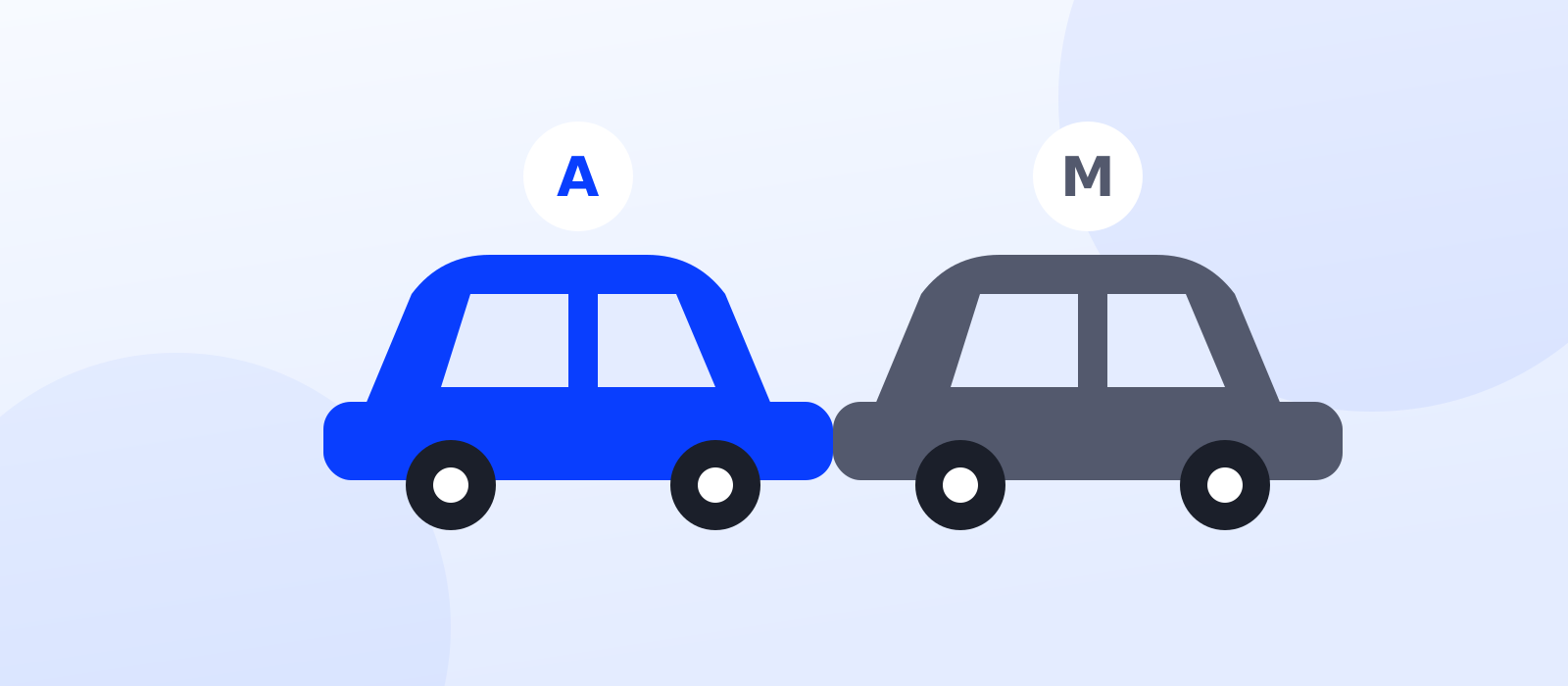
This used to be a matter of taste. It is now the biggest commercial decision you make.
Of the learners on Servicedrome who say which transmission they want, five in six ask for automatic. Among the cars instructors have listed on the platform, automatics outnumber manuals by about six to four, so the supply has moved, but it still lags demand. An instructor in an automatic in London can answer most of the requests posted; an instructor in a manual can answer a minority of them.
The case for manual is real but narrower than it was: learners who need a full licence for work, people buying a cheap manual car afterwards, and areas outside the cities where manual is still the default. If you teach in one of those, a manual car is fine. If you are choosing in a city, choose automatic, and if you want both, two instructors with one car each beats one instructor swapping.
Electric cars are automatic for licence purposes, which solves the transmission question and adds a running-cost one, covered below.
Lease or buy
Leasing a dual-control car is the route most new instructors take. The driving schools and a handful of specialist lessors offer cars with the controls fitted, livery optional, for roughly £125 to £180 a week at the time of writing. The higher figure usually bundles instructor insurance and breakdown cover, which makes it a surprisingly fair deal: the insurance alone is £1,200 to £2,000 a year, see driving instructor insurance. The lease includes servicing, and a replacement car when yours is off the road, which is what you need most and find hardest to arrange yourself.
The costs are the ones you do not see: a mileage cap, charges for damage at the end, and the fact that after four years of payments you own nothing.
Buying suits an instructor who is sure they will still be teaching in five years and has the cash or a sensible finance deal. A two-year-old supermini, dual controls fitted for a few hundred pounds, insured separately, serviced on a plan, is cheaper per year than a lease over five years and worth something at the end. It is also your problem when the clutch goes in week three. Set aside a maintenance fund from day one; a dual-control car does more clutch and brake work in a year than most cars do in five.
A reasonable rule: lease for the first car, when you do not yet know your hours or your area, and consider buying the second.
Which car
The qualities that matter are not the ones car reviews rate.
- Insurance group. The single biggest lever on your premium, decided here. Groups 5 to 10 are where instructor cars live.
- Clutch and brakes that forgive. For a manual, a light, progressive clutch with a clear biting point. For either, brakes that do not grab. Learners stall and brake late; the car should make both undramatic.
- A high, square view out. The learner needs to see the corners. Small SUV-shaped cars and tall superminis win here.
- Reliability and parts cost. A car that is in the garage is a car that is not earning. Ask instructors locally what they run and what breaks.
- Running cost. Fuel is £2,800 to £3,800 a year on a full diary. A hybrid cuts that by a third in town; an electric car charged at home cuts it by more, if you can charge at home and your lessons stay within range.
On Servicedrome, Toyota is the most common badge instructors list, by more than two to one over the next, Ford, with Volkswagen, Kia and Vauxhall following. The Yaris hybrid is the car behind that figure: automatic, frugal in traffic, low insurance group, and with a reputation for surviving learners. The Corsa and the Polo are the manual favourites. None of these is an exciting car, which is rather the point.
Electric
An electric dual-control car makes sense for a city instructor with home charging. The licence is automatic-only, which is what most learners want anyway; running costs are the lowest of any option; and learners like them. The cautions are range on a long day of lessons, the time lost to public charging if you cannot charge at home, a higher lease price, and the fact that a learner cannot take a test in a car whose battery is below what the examiner needs for the route. Most instructors who have switched say they would not go back; most who have not are waiting for the lease prices to fall.
Dual controls
Dual controls are a clutch (on a manual) and brake pedal on the passenger side, linked to yours. They are fitted by specialist firms, take a few hours, and cost a few hundred pounds fitted at the time of writing, less for a universal kit you can move to the next car. Leased cars come with them. If you buy, have them fitted before the car's first lesson, and tell the insurer: an undeclared set is the easy reason to refuse a claim.
Before you sign
- Decide the transmission from what learners in your area ask for, not from what you learned in.
- Get an insurance quote for the exact model and year before you commit. Two similar cars can be £400 a year apart.
- Ask a lease provider for the mileage cap, the end-of-lease damage terms, and whether the replacement car is dual-control.
- If buying, budget a maintenance fund from day one.
- Make sure the car fits the test: the DVSA's rules on which cars can be used for a test are on GOV.UK, and a few models and modifications are excluded.
The instructor-car figures are from cars listed on Servicedrome in November 2026; learner preferences are from lesson requests posted in the six months to then. Lease and fitting prices are those advertised at the time of writing. Instructors in Bromley and Hillingdon are among those who have told us an automatic changed their diary; your area will have its own answer.